The Last Seder
Reclining at the Last Seder
Matthew 26:17-30
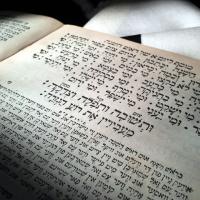
Although the various elements of the Seder have undergone some alterations over the centuries, today's Orthodox Seder liturgy is not unlike what Yeshua and his disciples were doing in that upper room. Seder means "set order," and it would seem that the set order of conducting a Passover meal was established very early on. An ancient Haggadah (Seder meal liturgy) was found in the Cairo Genizah dating back to shortly after the destruction of the Temple. Ariel, Israel. 1996. In form and content, it is very similar and on many points identical to the Haggadah still in use by normative Judaism.
By using the Passover Haggadah as a compass, it is possible for us to reconstruct (and annually relive) the "last supper" of Yeshua and his disciples.
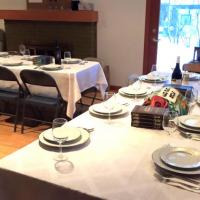
Try to imagine the large upper room of a First Century house, furnished for Yeshua and his disciples. The cool Mediterranean breezes of the Jerusalem evening make the oil lamps flicker and carry in the fragrance of spring blossoms. The melodic, chanting hum of the blessings, the scriptures and the various liturgical passages of the Seder rise from the mouth of the Master and the twelve men at the table.
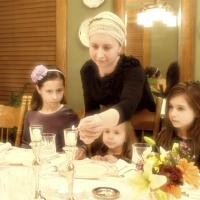
The disciples would have been reclining to their left on pillows around a low table. This was the prescribed posture for the Passover Seder, and even to this day participants in a Passover Seder lean to their left when eating the ceremonial foods as a remembrance of those days when everyone reclined around the Seder table. The reclining position is so significant that is mentioned in the Haggadah as one of the four questions the children at the Seder ask. "Why is this night different than all other nights? On all other nights we sit, but on this night we recline." The answer is that at the Seder table all the participants are like royalty, and that is the posture royalty assumed in the ancient world while eating.
The Bitter Herbs
Matthew 26:21-25
The bitter herbs are meant to remind the participants in a Seder of the bitterness of the suffering in Egypt. For disciples of the Master the bitter herbs have come to also be a remembrance of the bitterness of the night Yeshua was betrayed and the bitterness of his suffering on our behalf.
On that night, Yeshua announced to the disciples that one of them would betray him. Each of the Gospel narratives records the disciples' shocked and sorrowful reactions. Nervous glances are exchanged and reluctant soul-searching is made. "Master is it I?" each one asks. "Surely not I Master!" each one says.
We can only imagine the pain of this revelation. Those men had spent the last three years together in the most incredible of adventures. They had walked and talked, learned and argued, eaten and drank, slept and awakened together. They had seen the dead raised, the sick healed and demons cast out. Together, they had heard the voice of God. Together they had shared experiences creating a depth of kinship out of which betrayal must have seemed unimaginable. To betray Yeshua was an unthinkable sorrow and bitterness which broke their hearts to even consider.
Who could it be? Woe to that man who betrays the Son of Man. It would be better he had not been born.
A later development in the Passover Haggadah speaks of four types of sons at the Seder table with four different types of questions. They are the wise son, the wicked son, the simple son and the son unable to ask. Each of these four find representation among the Twelve disciples.
- The Wise Son, to whom can he be compared? To Yochanon ben Zavdi who reclined at the right hand of the Master that night. (John 13:23)
- The Simple Son, to whom can he be compared? To Shimon Peter who contradicted everything Yeshua said to him that night. (Matthew26:33, John 13:8-9, 36-37)
- The Wicked Son, to whom can he be compared? To Yehudah Ish Sicari who betrayed him that night.
- The Son unable to ask? To all the Twelve of whom it is written, "Yeshua saw that they wanted to ask him." (John 16:19).
In John's version of the story we read about an exchange between Shimon Peter and Yochanon ben Zavdai. Shimon motions across the table to get Yochanon's attention and then tells him confidentially, "Ask him which one he means?" Yochanon, who is reclining next to the Master, leans back and asks him in a whisper, "Master, who is it?"
Yeshua answered, "It is the one whom I will give this piece of matzah to when I have dipped it in the dish."
Then, dipping the piece of bread, he gave it to Yehudah Ish Sicarri ben Shimon. As soon as Judas took the bread, Satan entered into him… He went out. And it was night. (John 13:26-30)
The "dipping into the dish" signal Yeshua gave to indicate the identity of the betrayer is a ritual component of the Seder. Both unleavened bread (matzah) and bitter herbs (maror) are prescribed elements of the Passover meal. The ritual of dipping the unleavened bread into the bitter herbs and eating them together was instituted a generation before Yeshua by Hillel himself. Hillel was concerned that his disciples literally obey the commandment to "eat unleavened bread with bitter herbs" simultaneously, as the following quote from Haggadah demonstrates:
According to the custom of Hillel, he used to combine unleavened bread and bitter herbs and eat them together, to fulfill the verse that states: "They shall eat it with unleavened bread and bitter herbs." (Passover Haggadah quoting Numbers 9:11)
In the many modern Seders, freshly grated horseradish root is used for the bitter herbs. The volcanic effect of eating the horseradish on a dry piece of matzah allows one to experience first hand the culinary equivalent of John's statement regarding Yehudah, "then Satan entered him."
Regarding the imagery of the dipping bread, Ruth Rabbah offers us this tantalizing Messianic interpretation.
Come near," means come near to the Kingdom. "Eat of the bread" refers to the bread of Messiah's royalty. "Dip your bread in the vinegar," refers to Messiah's sufferings, as it said, "But he was pierced for our transgressions." (Ruth Rabbah 5.6 quoting Ruth 2:14 and Isaiah 53:5)
Born Again Bread
Matthew 26:26
During the course of the Seder meal, the master of the table lifts the bread and declares, "This is the bread of affliction." The bread of affliction is the bread Yeshua broke with his disciples.
The bread was, of course, matzah. For the duration of the festival, no product containing yeast can be eaten or brought into the home. It is a commandment to eat unleavened bread on each of the seven days, and specifically during the Seder. There is a deep and spiritual meaning to the ritual of eating only unleavened bread for the seven days of the festival. In ancient times, dough was leavened by adding a starter dough left over from the last batch of bread, much the way sour dough bread is made today. Therefore, a culture of leaven was passed on from loaf to loaf to loaf. The commandment to get rid of all the old leaven and start with new unleavened bread symbolizes a clean break with the past. It is a chance to start over. It is a chance to start fresh. It is like being born again.
Paul tells us, "Get rid of the old yeast that you may be a new batch without yeast." And he tell us to, "Keep the Festival, not with the old yeast, the yeast of malice and wickedness, but with bread without yeast, the bread of sincerity and truth." (1 Corinthians 5:7,8)
For this reason, the matzah was an apt symbol in the hands of Messiah.
The Afikomen
Mark 14:17-22
Yeshua did not take a piece of the Passover lamb and say, "This is my body . . ." Instead He picked up a piece of matzah. At a Seder, after eating the Pesach lamb, nothing more was allowed to be eaten for the rest of the night. Pesachim 119b-120a. In the Mishnah, the Greek loan word afikomen originally was used to mean "desert." It literally means "that which comes," and desert is, of course, normally that which comes after the meal. At Passover, however, the Mishnah tells us, "one may not conclude after [eating] the pesach lamb by saying 'and now to the afikomen.'" M. Pesachim 10.8 Why? Because the lamb itself is supposed to be "that which comes" after. At the Passover meal, the lamb itself is the afikomen/desert.
In the time of Yeshua, Jews who could not eat of a Passover lamb slaughtered at the Temple on account of they were unclean or were far from Jerusalem were still expected to partake in a Seder and eat of Unleavened Bread and Bitter herbs. They were forbidden to eat lamb with their meal, but they were still allowed bitter herbs and unleavened bread.
It can be deduced that an unclean person and one who was on a journey [far from Jerusalem is still required to eat unleavened bread and bitter herbs]. Although you might argue that since they cannot eat of the Pesach lamb, they are not required to eat unleavened bread or bitter herbs either; [the Torah] informs us otherwise. What says Raba? "In respect of an unclean person and one who was on a journey a verse is not required, for they are the same as an uncircumcised person and an Gentile. After all, the Torah says, "No uncircumcised person shall eat of it." He may not eat "of it [that is the lamb]", but he must eat unleavened bread and bitter herbs." (Pesachim 120a quoting Ex 12:48)
Thus there were many Seders conducted in the days of the Master without lamb. In that case, the unleavened bread was eaten in place of the lamb. A single piece of matzah was substituted to represent the lamb. As a substitute for the lamb, this piece of Matzah was eaten last in the meal, and came to be called the "afikomen."
After the destruction of the Temple, the lamb could no longer be slaughtered for Passover at all. It quickly became a universal custom to set aside a piece of matzah for the end of the meal which would then be eaten as a remembrance of the Passover lamb. To this day, the last thing eaten at the a traditional Seder meal is a single piece of matzah, the afikomen, which symbolizes the Passover lamb.
Some scholars understand the matzah which Yeshua equates with his body to be the afikomen, a symbolic substitute for the pesach lamb. David Daube interprets the word Afikomen to mean He that Cometh.1 Even the word is suggestive of Messianic expectation. The word afikomen, "that which comes" can just as easily be rendered as "he that comes." The second-century Christian preacher Melito referred to the Master as the afikomen of Passover: "he that comes." The interpretation may have originated long before the days of Melito. It may well have been the understanding of the early believers. It is certainly an apt title for Messiah: "He that comes," for Jerusalem will not see Him again until she declares, "Blessed is He that comes."
There is also evidence that the afikomen matzah had Messianic overtones in early Judaisms. Daube supposes that Hillel's reference to "eating the Messiah" in Sanhedrin 99a is afikomen imagery. Hillel believed King Hezekiah was the promised Messiah.
Rabbi Hillel said, "There shall be no Messiah for Israel, because they have already eaten him in the days of King Hezekiah. Rabbi Yoseif said, "May God forgive [Hillel] for saying this." (Sanhedrin 99a)
Some Jewish communities have customs which connect the afikomen to the Messiah. In some places, the afikomen is used in a ritual prediction of the coming of Messiah. In other communities it is kept as a good luck charm, and in one amazing tradition, it is believed that a piece of the afikomen can calm the sea. Beliefs like this would seem to betray the Messianic footprint of the Gospel within Judaism.
Hiding the Afikomen
In Seders conducted subsequent to the destruction of the Temple, the afikomen is eaten in remembrance of the Passover lamb. In order to commemorate the eating of the Passover Lamb, a single piece of Unleavened Bread is used as a substitute for the lamb: the afikomen.
There is a curious ritual which accompanies the eating of the afikomen in some Ashkenazi communities. Earlier in the meal, the matzah is broken. The broken piece of matzah is wrapped in linen and hidden away by the father. Usually it is not hidden too far away, nor is it hidden so that it would be terribly difficult to find, but it is, nonetheless, hidden and out of view. After the meal is eaten, the children are given the task of searching for the afikomen. Until the afikomen is found, the Seder meal cannot proceed.
The following is an excerpt from a Passover Haggadah commentary explains the symbolic meaning of the hiding of the afikomen.2
We complete the Seder meal by removing the afikomen matzah from its hiding place. The matzah, which represents the redemption, was hidden for some time, and only at the end of the meal is it revealed. This symbolizes the ultimate redemption.
Once [the ultimate redemption] is realized and is revealed, we will understand that it was with us all the time, throughout the centuries of suffering in [exile], although it was concealed from our view.
This is the mystery of the afikomen. In the Passover Seder, the afikomen, which to believers represents Yeshua, is hidden from view until the end of the meal. At that point, it is found, and eaten by everyone at the table. This symbolizes the ultimate redemption of Israel. Once Messiah is realized and revealed, Israel will understand that He was with her all the time, throughout the centuries of suffering in exile, although He was hidden from view.
Yeshua also offers a symbolic interpretation to the afikomen. He says that the afikomen is His body, which is given for us. Yeshua, in His own Rabbinic way, superimposes symbolism on top of symbolism. The afikomen matzah is symbolic of His body. But the afikomen matzah is supposed to be symbolic of the Passover lamb. Therefore, He is the Passover lamb. Perhaps that is why there is no lamb at His Seder table. Yeshua is the lamb.
The New Cup
Mark 14:23-25
After the afikomen, there is yet two more cups to conclude the Passover Seder meal. The Master took one of these and said, "This is my blood of the covenant, which is poured out for many." But in several manuscripts there is a textual variant which includes the adjective "new," hence, "this is the blood of the new covenant, brit chadashah." How are we to understand this new covenant? Is it new in the sense of something new replacing and obsolescing the old, or is it new in the sense of something renewing? The Hebrew word chadash works in both of these senses.
As Paul teaches in Galatians 3:15-17, a later covenant cannot set aside a former covenant.
The Master goes on to tell His disciples, "I will not drink again of the fruit of the vine until that day when I drink it anew in the kingdom of God." The same Greek word for "new" is used in the second statement: "until I drink it anew." Here the term is not meant to imply a replacement of the previous cup he has drunk with his disciples, but a return to that cup. It is a renewal of a shared cup.
"This is the covenant I will make with the house of Israel after that time," declares the LORD. "I will put my Torah in their minds and write it on their hearts. I will be their God, and they will be my people." (Jeremiah 31:33)
The Hymn
Mark 14:26
The Seder concludes with the singing of the Psalms of the Hallel Pesachim 95b (Psalms 113-118) and the Great Hallel (Psalm 136). Imagine Yeshua and hid disciples singing the traditional melodies as they lift their voices together in the words of the Hallel. How profoundly appropriate those Psalms are to the occasion. Imagine what it was like for the disciples to sing those words again at subsequent Seders!
Open for me the gates of righteousness; I will enter and give thanks to the LORD.
This is the gate of the LORD through which the righteous may enter.
I will give you thanks, for you answered me; you have become my salvation.
The stone the builders rejected has become the capstone;
the LORD has done this, and it is marvelous in our eyes.
This is the day the LORD has made; let us rejoice and be glad in it.
O LORD, Hoshiah Na, Save now! O LORD, grant us success.
Blessed is he who comes in the name of the LORD. (Psalm 118:19-26)
- 1. St. Paul's Cathedral Lecture: Diocesan Council. 1966—The Significance of the Afikomen. Pointer (Spring 1968).
- 2. Twerski, 1995. Pg. 155.