Newcomer's Guide

Get oriented before you arrive: what our services are like, how the synagogue is arranged, what to wear, and common Hebrew terms you may hear.

We understand that visiting a Messianic Jewish synagogue for the first time can be both exciting and a bit intimidating. To help you feel more comfortable and prepared, we've put together this Newcomer's Guide. Here, you'll find information about what to expect during our services, how to navigate the synagogue, appropriate attire, and a glossary of common Hebrew terms you might hear.

About our Services

We use traditional Jewish liturgy, which includes prayers, blessings, and readings from the Torah and other sacred texts.

Ancient Hebrew Prayers

Our services primarily consist of prayers and blessings in Hebrew.

We use the traditional Jewish liturgy, which includes prayers, blessings, and readings from the Torah and other sacred texts. Don't worry if you can't follow along. Feel free just to listen and observe, connecting to God in your own way. If you ever feel lost, just ask the person next to you. People will be happy to help you.

There are are two editions of our siddur (prayer book). Both contain Hebrew and an English translation. One edition has the Hebrew text in Hebrew characters, while the other has the Hebrew transliterated into English characters.

Torah Reading in Hebrew

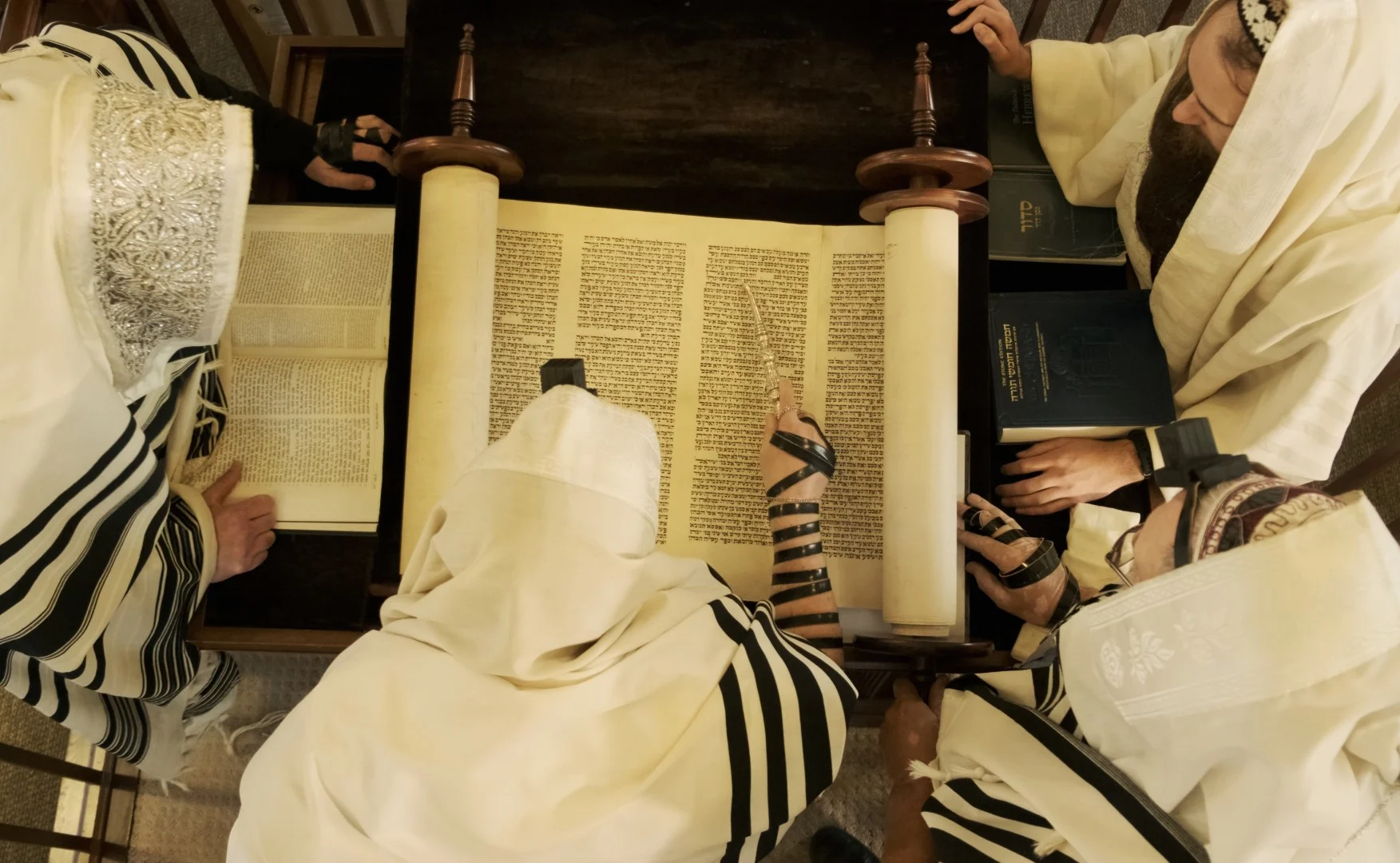
We read a section in Hebrew from our Torah scroll.

The Torah consists of the first five books of the Bible. The scroll is handwritten on parchment by a trained scribe and is treated with great reverence. The Torah is read in Hebrew, but we will announce the references and summarize each reading in English. To follow along, you can use a Chumash (a printed book of the Torah) or any Bible you like.

Several individuals will be called up to the Torah to recite blessings before and after the readings. If you are a Jewish man, you may be invited to participate in this honor. We will guide you through every step. As we bring the Torah scroll back to the ark, it is customary to touch the Torah with your prayer book or a corner of your tallit (prayer shawl) and then kiss that object as a sign of reverence and love for God's word.

Sermon in English

We have a teaching in English on Shabbat and Festival mornings.

The teaching is usually based on the weekly Torah portion or a seasonal topic. After the teaching, there will be a few more prayers before dismissal. Some people specifically try to arrive in time for the teaching and the smaller dose of prayers that come afterward. However, it's hard to predict exactly when the teaching will occur.

Inside the Synagogue

A synagogue has unique features and a different arrangement from other places of worship.

Our Sacred Space

Our sanctuary faces east toward Jerusalem.

The bimah (reading platform) is toward the center where the Torah is read. The seating is arranged to surround it, just as the Israelites camped around Mount Sinai when they received the Torah. A large cabinet called the aron kodesh (holy ark) contains our Torah scrolls.

Men's and Women's Sections

We provide special seating sections for men and women.

A partition called a mechitzah separates the men's and women's sections. The men's and women's sections are the side-facing rows toward the front.

All men and women, including members and guests, Jews and Gentiles, are invited and encouraged to sit in these rows. Young children do not need to observe the gender separation and can sit with parents on either side.

If you prefer to sit together as a family, you are welcome to sit in any of the front-facing rows in the back.

What to Wear or Bring

Choose clothing that shows respect for the holiness of the space and the congregation.

Dress Modestly

Wear appropriate clothing for a synagogue.

Choose clothing that shows respect for the holiness of the space and the congregation. Be sure your clothing covers your shoulders, chest, midriff, and knees. Avoid wearing clothing with offensive language or images.

The same modesty standards apply to men and women. We do not require women to cover their heads, but some choose to wear a head covering, especially married women. Likewise, some women prefer to wear skirts, but pants are also acceptable.

On Shabbat and holidays, we like to dress up a bit more than on weekdays. But casual or formal style is a matter of personal preference and comfort—not an expectation we place on others.

Head Coverings for all Men

All men and boys, please wear a hat or kippah while you are here.

In Jewish culture, it is customary for men (Jewish and Gentile) to wear a hat or a kippah (the traditional skullcap) when in a holy space or during prayer. If you don't have one, don't let that stop you from coming. We are happy to let you borrow one of ours!

Tallit for Jewish Men Only

Please refrain from wearing a tallit unless you are a Jewish man.

Some Jewish men and boys wear a tallit (prayer shawl) during prayer. This is a specific sign of Jewish identity. In keeping with traditional norms, women in our community also do not wear a tallit.

Bring Yourself

Shabbat is not a day for shlepping.

Don't worry about bringing anything. Just bring yourself and your curiosity. We are happy to provide you with everything you need for the service. If you want to bring a favorite Bible or prayer book, you are welcome to do so. Or just use ours.

Don't Bring Food

Don't worry about bringing food.

Due to the complexity of traditional kosher and Sabbath laws, we prefer to provide the food ourselves. If you would like to contribute, you can send in a donation to help cover the cost of the meal.

Hebrew Glossary

Learn the meaning of common Hebrew words and phrases you may hear during your visit.

Shabbat or Shabbos
The Sabbath, observed from Friday evening to Saturday evening.
Shabbat shalom
A greeting meaning "Sabbath peace," commonly used on Shabbat.
Torah
The first five books of the Bible; also refers to the scroll containing these books.
Siddur
Prayer book used during services.
Kippah
A skullcap worn by men and boys.
Tallit
Prayer shawl worn by Jewish men during prayer.
Bimah
The platform from which the Torah is read.
Aron Kodesh
The holy ark where Torah scrolls are kept.
Mechitzah
Partition separating men's and women's sections.
Chumash
Printed book containing the Torah text.
Aliyah
The honor of being called up to the Torah for a blessing.
Hashem
Literally "The Name"; a respectful way to refer to God.
Kiddusha Rabba
A special blessing over wine recited on Shabbat morning.
Havdalah
A ceremony marking the end of Shabbat, involving blessings over wine, spices, and a candle.
Chag Sameach
A greeting meaning "Happy Holiday," used on Jewish festivals.
Oneg
A joyful gathering or meal held after Shabbat services.

No glossary terms match “.”